
Anonymous Proxy vs Anonymous VPN: Which One to Choose?
What Is an Anonymous Proxy?
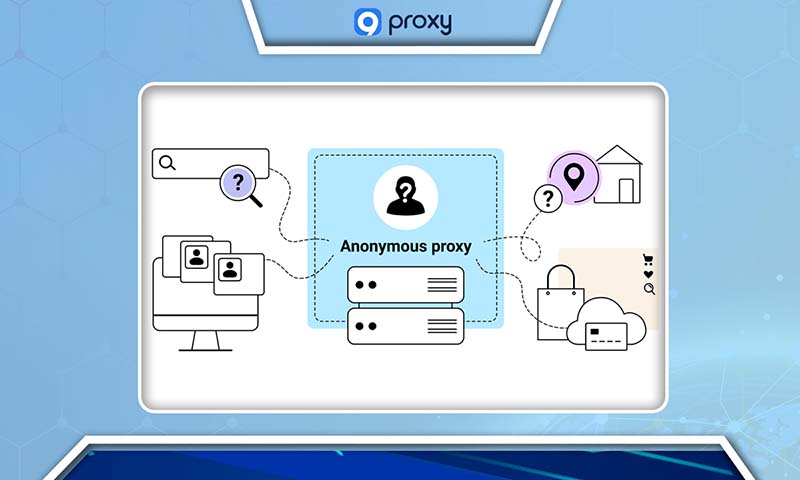
A proxy server acts as an intermediary for requests from clients seeking resources from other servers. When you use a proxy server, your internet connection is routed through this intermediary, effectively masking your real IP address from the websites you visit. This setup is pivotal for those who wish to browse the web anonymously.
Proxies come in various types, with different levels of anonymity. Transparent proxies, for example, do not hide your IP address from the websites you visit, making your online actions visible. In contrast, non-transparent or anonymous proxies hide your original IP address and indicate that a proxy server is being used to access the website.
An anonymous proxy offers more than just basic anonymity:
- Privacy Protection: It keeps your browsing history private.
- Content Freedom: Helps bypass content restrictions and targeted marketing efforts while also blocking online advertisements.
- Access to Restricted Content: Enables access to geo-restricted websites, expanding your access to global content.
- Efficiency and Speed: Enhances browsing speeds by caching web pages, reducing load times for frequently visited sites.
Note: While anonymous proxies provide increased privacy compared to transparent proxies, they do not encrypt your data like VPNs do. Therefore, for activities requiring higher security, such as transactions involving sensitive information, a VPN might be a more suitable choice.
How Does Anonymous Proxy Work?
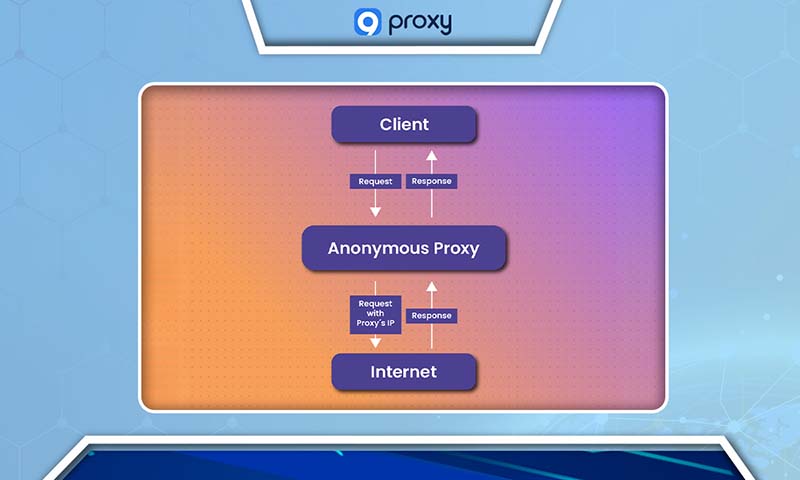
An anonymous proxy acts as a middleman between your device and the internet. Instead of your device directly connecting to a website, your request goes through the proxy server first. The proxy server then accesses the website for you and forwards the website's data back to your device.
The key feature is that the website sees only the proxy server's IP address, not your actual IP address. This way, your real IP address and location remain hidden, making it appear as though the proxy server is accessing the website rather than you. This setup effectively protects your online identity and enhances your anonymity.
Note: Although anonymous proxies successfully mask your IP address, they don't encrypt the data you transmit or receive. This means that even though your location is concealed, the information you exchange online can still be accessed by others on the same network, like on public Wi-Fi. For complete encryption and enhanced security, consider using a VPN alongside or instead of a proxy.
What Is a VPN?
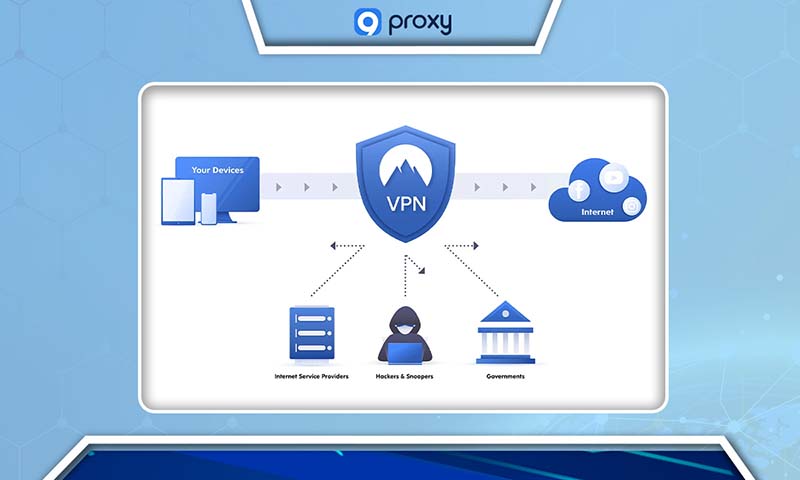
A VPN (Virtual Private Network) is similar to a proxy server in that it makes your internet traffic appear to come from a different location. However, a VPN takes it further by creating a secure, encrypted connection between your device and the VPN server. This secure pathway, known as a "tunnel," ensures that your data is protected as it travels.
The encryption that VPNs use is what makes them special. It protects your data from being intercepted or viewed by others, even in risky situations like using public Wi-Fi. With a VPN, all your data remains private, ensuring that no one can see sensitive information while you're browsing the internet. This makes VPNs especially useful when accessing personal or confidential information online.
VPNs come in various forms, designed for different needs:
Remote Access VPN: Allows users to connect to a private network from a remote location securely.
Extranet-based Site-to-Site: Connects two separate, secure networks to each other over the internet, allowing businesses to share resources without exposing them to the public internet.
Intranet-based Site-to-Site: Used by multiple offices of the same company to connect their networks securely using the internet as if they were a single network.
What is The Difference Between Anonymous Proxy and VPN?
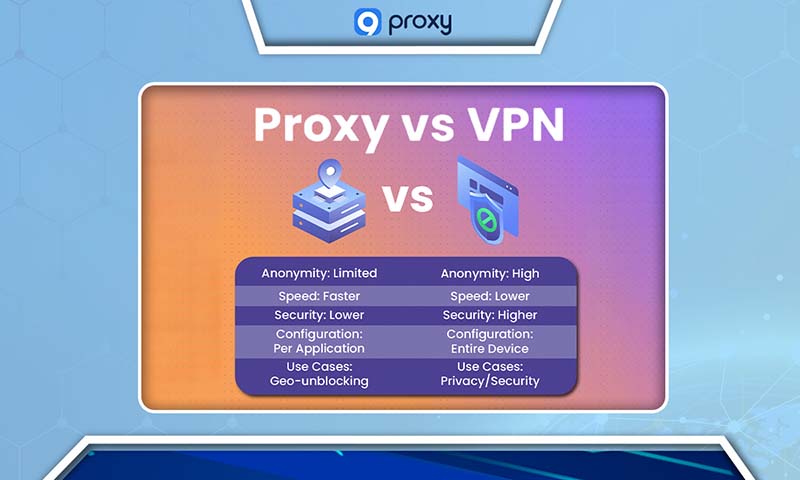
While both VPNs and proxy servers can mask your IP address, they differ significantly in functionality and security, impacting their use in different scenarios.
Security
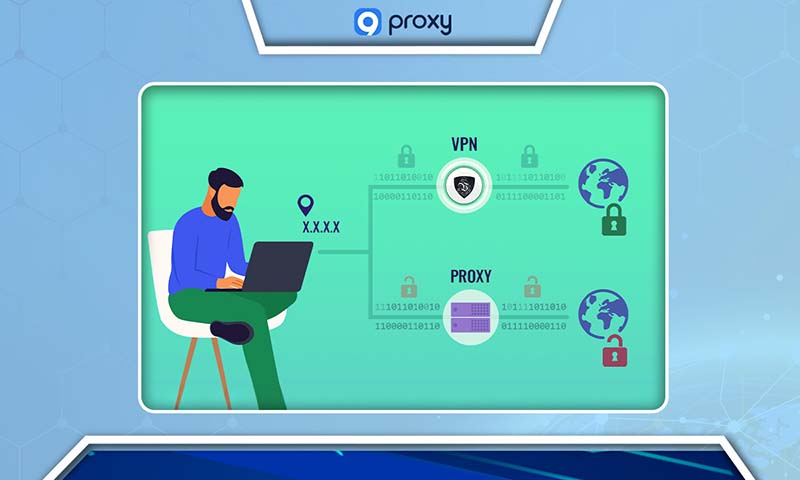
Proxy servers provide a basic level of anonymity by hiding your IP address from the websites you visit, acting as a middleman. However, they do not encrypt your data, making them less secure than VPNs. In contrast, VPNs encrypt all data that travels between your device and the internet, safeguarding your information from interception by third parties, including ISPs and potential cyber attackers.
Privacy
Both tools hide your IP address, but a VPN offers superior privacy by encrypting your entire internet connection. This encryption ensures that even if data is intercepted, it remains unreadable without the decryption key. Proxies, while they mask your IP, leave the content of your internet traffic exposed, which can be a significant drawback in terms of privacy.
Speed
Proxies can slow down your internet speed, especially if the proxy server is congested with multiple users. Free proxies are particularly notorious for slow speeds. VPNs can also affect speed, particularly if the server is far from your location, but premium VPNs minimize speed loss with high-quality servers and advanced technology, making any delay mostly unnoticeable.
Risks of Using Anonymous Proxy and VPN
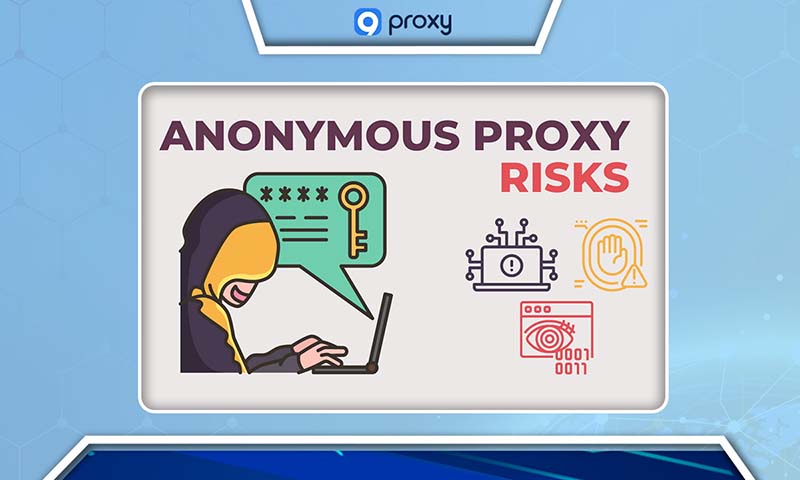
While anonymous proxies and VPNs offer significant advantages in privacy and security, they also come with their own set of challenges and risks that users need to be aware of.
Compatibility Challenges
Anonymous proxies and VPNs are not always welcome guests in the digital world. Some websites and online services detect and block traffic that appears to be coming from these sources. This means you might face restrictions or be barred from accessing certain sites, as these services aim to maintain control over who accesses their content and from where.
Privacy Considerations
The very tools designed to protect your privacy can, paradoxically, also pose risks to it. Some less reputable proxy and VPN services might track and log your internet activity, which defeats the purpose of using them in the first place. Therefore, it’s crucial to research and select providers that are known for respecting user privacy and implementing strict no-logs policies.
Technical Complexities
Setting up and maintaining a proxy or VPN connection can be technically demanding. You may need to adjust settings, install software, or troubleshoot connection issues, which can be challenging, especially for those not technically inclined. The learning curve can be steep, and ongoing maintenance may be required.
Legal Implications
Understanding the legal landscape regarding proxies and VPNs in your country is crucial. In some regions, using these tools to bypass geo-restrictions or access prohibited content may be legally questionable or illegal. Always ensure compliance with local laws to avoid potential legal issues.
Note: While proxies and VPNs enhance privacy and access to information, they are not foolproof solutions and come with potential pitfalls that require careful consideration and responsible use.
Which One Is Suitable?
Choosing between a VPN and a proxy depends on your specific needs. If you prioritize top-tier security, privacy, and the ability to bypass website blocks, a VPN is the optimal solution. It establishes a secure, private pathway for your data, ensuring your information remains protected.
Conversely, if your primary concern is maintaining basic browsing privacy without additional security features, a proxy is a suitable option. Proxies conceal your computer's online address and are typically faster and simpler to use compared to VPNs, making them ideal for everyday internet activities. Ultimately, the decision boils down to your preference: prioritizing robust security or opting for swift, fundamental privacy.
FAQs
Is It Feasible to Use VPNs and Proxies Simultaneously?
You can use VPNs and proxies at the same time, but it might take some extra setup. However, adding a proxy can slow down your internet without giving much extra benefit. It's usually better to choose one or the other for your activities.
Should I Use a Free Proxy or a Free VPN?
Using free proxies or VPNs can be risky for your security and privacy. Since the providers need to make money, they might track your online activities, show lots of ads, or restrict how much data you can use. It's safer to choose paid services that respect your privacy.
Is a Proxy Server Necessary If You Already Use a VPN?
Both a proxy server and a VPN can hide your IP address, but a VPN also encrypts all the data you send and receive, which a proxy doesn't do. If you're already using a VPN, there's no need to use a proxy as well, because the VPN covers both privacy and security needs.
Conclusion
Exploring the article "Anonymous Proxy vs Anonymous VPN" can be particularly helpful as it guides individuals in making the right choice for their needs. While both anonymous VPNs and proxies reroute your traffic through a remote server and hide your IP address, VPNs generally offer more advantages. VPNs provide enhanced security and privacy by encrypting your data, making them the better choice if these factors are important to you. If you prioritize keeping your online activities private and secure, opting for a VPN is the recommended approach, especially when comparing anonymous proxy vs anonymous VPN services.
获取有关 所有代理相关内容 的时事通讯